

A Guide to Noise Cancelling Over Ear Headphones
If you live in a noisy city, make daily commutes or work at home, noise-cancelling headphones are vital to keep your attention and hearing intact. But there's a lot to pick from.
Noise cancellation makes use of electronics to create a sound that is 180 degrees out of phase with ambient sounds, effectively cancelling the noise. This can help you concentrate in the office or catch some rest on your next flight.
Sound Quality
Active noise cancelling headphones feature powered technology that makes use of batteries to produce sound waves to block out the ambient sound. These headphones are equipped with miniature microphones that listen to the outside world and produce the opposite sound. This cancels out the offending frequencies and block out background noise which allows you to concentrate on the music without distraction. Our acoustic engineers tested these headphones to determine if they isolate external sounds and how much the noise-canceling tech interfered with audio frequencies, which are the ones you really care about when listening to podcasts or music.
In our tests, we measured how well the headphones could block higher-frequency, continuous noises such as plane engines and chatter in restaurants as well as shorter-duration incidental sounds such as the sound of the animated chatter of a coworker. We also looked into how much noise cancelling technology interferred with audio frequencies in general and what the distinction was in the ability of different headphones to cut down the background noise.
Noise-canceling headphones have the characteristic of a "hoppy sound" and can be a bit muddy in the high frequencies. This is because ANC creates its own soundwaves which are different from the music being played and can sometimes interfere with the high frequencies in your audio. The top headphones we tested are able minimize this effect but not completely eliminate it completely.
The monoprice BT600ANC are a low-cost pair of noise cancelling headphones that work pretty well. They're lightweight, comfortable and feature a good range of features including ANC, ambient awareness modes as well as touch controls and support for the high-end codecs LDAC and Apt-X (which are similar to CD quality). They don't offer the same isolation as other headphones but for casual listeners they will be sufficient.
Many customers opt for the Sony WH1000XM5 as it is a perfect fit for all of the criteria. They have a great noise cancellation system as well as excellent sound quality. They also come with numerous useful extras including Quick Attention Mode as well as Speak-to- Chat wear detection, and DSEE Extreme Upscaling. They're not water-resistant and cannot be folded flat. This means they're not a good fit for the gym.
Noise Cancellation
Noise cancelling headphones make use of a combination of hardware (microphones) and software to continuously listen to ambient noises and help them be quieter when you're listening to videos or music. Active noise cancellation, or ANC as it's more popularly referred to, is the result. It works by using a trick called phase inversion to create the exact opposite of unwanted sound waves and cancel them out.
In the end, you'll get to listen to your music because the speaker focuses solely on the music and you'll be able tune out distractions around you. The noise cancellation capabilities of headphones vary from model to model, with models that are over-ear capable of providing the most complete noise cancellation because their earcups fit over your ears. While some on-ear and in-ear options can also offer decent noise cancellation, they are typically less effective at blocking out constant rumbles such as the roar of airplane engines and other background noise.
The digital signal processing in the headphones uses the microphones to detect ambient noise. It then plays the opposite of what is coming out of the speakers. This blocks it out. As a result, you're left with the sound from your media, which should be played at the same volume as the music or podcast you're listening to.
Some users of ANC headsets have complained of disorientation and dizziness. While these feelings are not uncommon, they shouldn't cause the most discomfort. They're more likely to occur when you listen for long periods and are exposed lots of high frequencies, which are not filtered by the ear canal and more prone to irritation.
Noise cancelling headphones are a great choice for commuters, frequent travelers, and those who work in noisy areas. They can block out background noise of trains, planes and cars so you can focus on your audio or podcast experience. Don't expect them to completely to block out all other noises, as this would be risky if you couldn't hear the sound of cars or people coming towards you.
The Monoprice BT-600ANC is a great pair of noise cancelling lightweight headphones that you can take on the go. It's an excellent choice for a price that is affordable. They're loaded with features that you'd expect to see in more expensive models of headphone including a programmable EQ and support for AAC and the aptX audio codecs.
Battery Life
The noise-canceling electronic technology in headphones is powered by rechargeable batteries. This means that you'll likely go through them pretty quickly. The idea of keeping extras around or opting for an wireless device with Bluetooth codec support will make sure you're always prepared to shut out the world when you want to.
Noise cancelling headphones work through the release of anti-sound waves that counter the structure and volume of unwanted sounds. It can result in a tiny amount of sound leakage but it's usually better than letting the noise of the engine of your plane or traffic bleed into your music. It's important to keep in mind that ANC may alter the quality of your music a bit Some users have reported a high-pitched hiss when nothing is playing on their headphones - however this shouldn't be much of an issue for most listeners.
Our tests on earbuds and headphones have revealed that active noise cancellation is more effective than passive isolation. To truly block out outside noise, you require a tight seal between your ears and the headset's ear cups or buds. In- over ear headphones noise cancelling with Comply memory foam tips or over-ear headphones that completely seal your ears are the best way to get the most from your headphones.
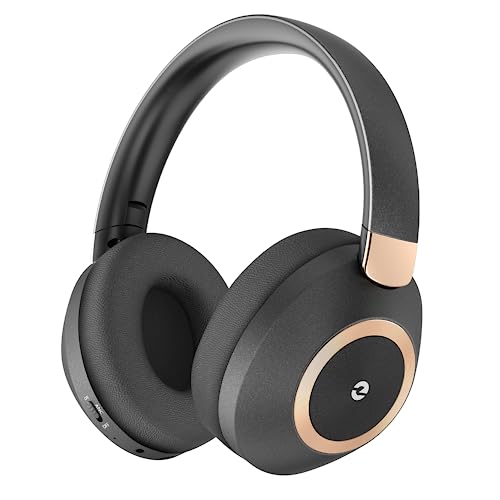
Many reviewers have praise for the Sony WH1000XM5 headphones and it's easy to see why. It has a lower volume of external noise than its predecessors, and has a variety of useful features, including Quick Attention mode and DSEE Extreme Upscaling. They're comfortable, lightweight and stylish with top quality materials.
They don't fold up as compactly as other options however this isn't a major issue for such a great pair of headphones. They're well priced too and come with a long battery life that will get you through long flights and commutes without a recharge.
The Edifier W950NB are a excellent pair of headphones for noise cancellation, and compete on features with pricier models from the major brands. They're comfortable, lightweight and fold down into an incredibly compact case that can easily fit into your bag. The ANC is great at reducing low-frequency sound and the audio quality for the price is outstanding.
Design
If you're looking to block out the world during your commute, or to get some sleep on a flight headphones that cancel out noise can be an important factor. Finding the perfect pair of headphones can be difficult. Luckily, we've put together a guide to assist you in finding the perfect pair for you. We considered a range of factors, from ANC magic and sleek design. We also examined if you can alter the noise cancellation and if the headphones come with an on-ear sensor that can stop the music when you take them off them.
There are two main types: passive and actively. Passive headphones use heavily padded earcups to physically block out external sounds from reaching your ears, whereas active noise cancellation makes use of inbuilt microphones to listen to the surrounding environment and create "anti-noise" frequencies to block the background noise. These frequencies are inverted and incorporated into the music, effectively blocking out outside noises and playing your music.
In addition to this some models also come with features like transparency mode and multi-device pairing, which let you hear your environment in a more natural and natural way or let you switch off the active noise cancellation feature and be able to have normal conversations. Some headphones also include a programmable physical button on the left earcup that lets you adjust how much ambient sound is allowed to pass through.
Another thing to take into consideration is that all noise cancelling headphones diminish the sound quality of your music to produce the anti-noise effect which is a big drawback when you're a purist, or love the richness of high-frequency sounds. The ANC circuitry can also emit high-frequency hissing, which is distracting.
Finally, if you choose headphones that feature active noise cancellation be prepared to pay more for them than the non-ANC models because the extra electronics and batteries required for the technology add to the total cost. If you're willing to spend the cash and you'll get a great pair of headphones that will provide you peace and quiet during your daily commute or on a long flight.